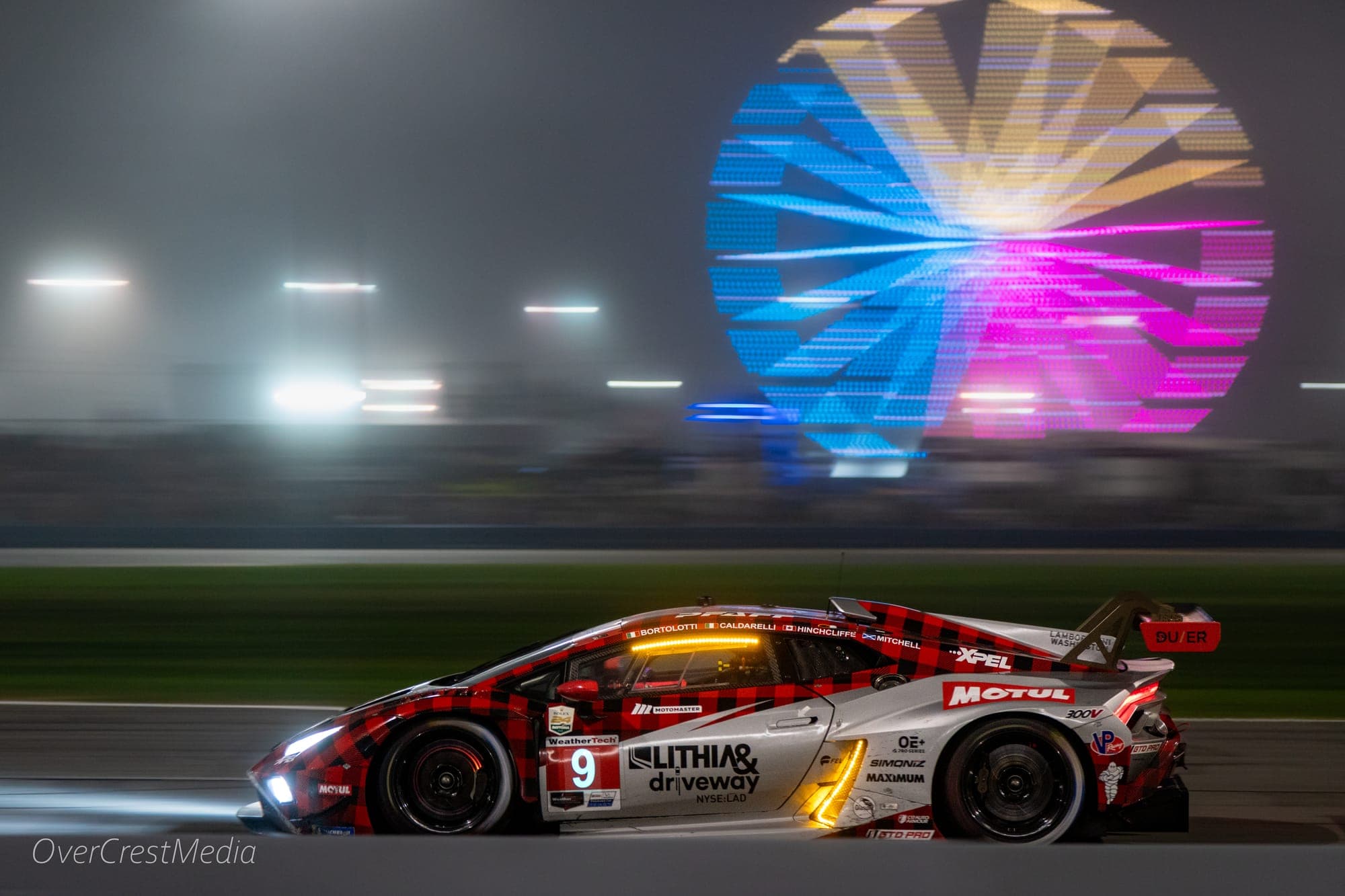
The run from a low October sun into full dark at Road Atlanta, and how the headlights rewrite every frame you thought you had.
The last hour of daylight at Road Atlanta is the one you plan the whole trip around. The sun drops behind the trees on the back half of the circuit and the whole place goes amber, then blue, then nothing at all — and the cars start writing with their own light.
I shoot the golden hour like everyone else, low and into the sun, waiting for a prototype to crest the hill at turn three with the halo catching fire. But the frames I actually came for happen later, once the track lights take over and the only thing separating a car from the black is the glow off its own bodywork.
Slowing down as it gets darker
The instinct in low light is to chase shutter speed. Fight that. A panning frame at 1/60th, tracked cleanly through a corner, turns the darkness into streaks and keeps the car sharp where it matters. You lose a lot of frames. The ones that land are the ones nobody else has.
Endurance racing rewards patience twice: once from the teams, once from the people photographing them.
By the ninth hour the grandstands thin out and the paddock goes quiet, and that is when the race gets photogenic. Brake discs glowing into the braking zones. The wash of a following car's lights through a rival's rear wing. Steam coming off the bodywork on a cold night.
What I'd change
Bring the faster glass. Bring more batteries than you think — cold nights eat them. And stop reviewing the back of the camera. The light is only doing this for another twenty minutes, and it is never coming back the same way twice.